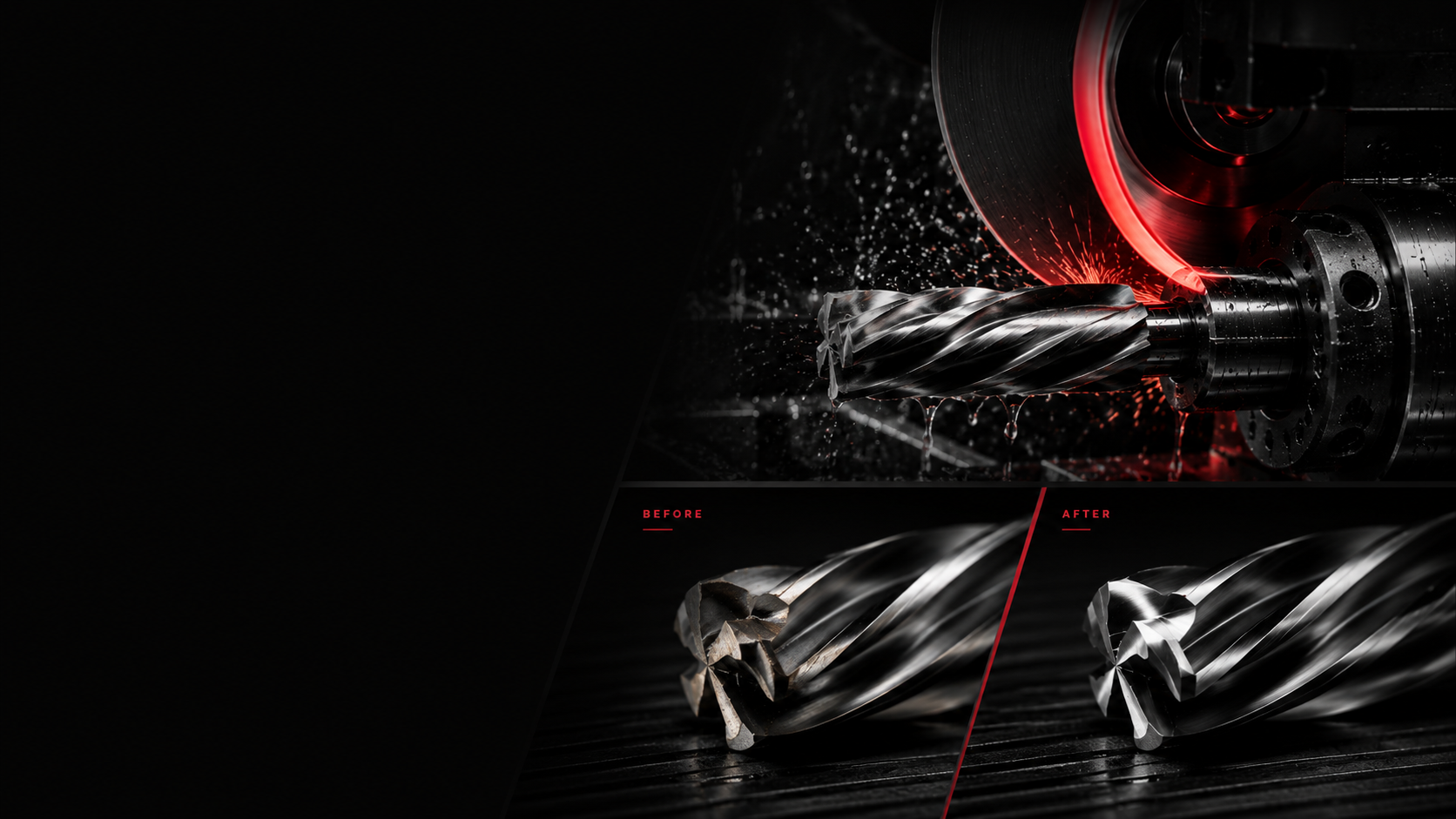
Extending Tool Life Through Regrinding
Solid carbide tools are built for high-performance machining, but wear is unavoidable. Cutting edges lose sharpness, geometries degrade and tool performance eventually becomes less consistent. Instead of replacing tools immediately, professional carbide tool regrinding restores cutting geometry and extends the usable life of the tool.
For CNC operations using drills, end mills and other carbide tooling, this can create measurable savings over time. A structured regrinding program allows shops to recover performance from tools that would otherwise be discarded too early.
Reducing Tool Replacement Costs
Buying new carbide tools for every production cycle can quickly increase operating costs. Regrinding reduces the frequency of new tool purchases by allowing manufacturers to reuse existing tooling after professional reconditioning.
This is especially valuable for production environments where tools are used repeatedly across demanding materials, tight tolerances and high-volume machining operations.
- Lower tooling replacement frequency
- Better return on existing carbide tooling investment
- Reduced inventory pressure for machine shops
- More predictable tooling cost management
Improving CNC Machining Efficiency
Worn tooling can create inconsistent machining results, poor surface finish, dimensional issues and unplanned downtime. Properly reground carbide tools help restore cutting performance and support more stable CNC machining operations.
When tools are reconditioned with the correct geometry and edge preparation, manufacturers can maintain better machining consistency while reducing interruptions caused by premature tool failure.
Supporting Production Consistency
In industrial manufacturing, consistency matters as much as cost. A reliable regrinding program helps standardize tool recovery and supports repeatable performance across production runs.
For industries such as oil & gas, automotive, general manufacturing and precision CNC machining, carbide tool regrinding can help maintain productivity while controlling tooling expenses.
Reducing Waste in Manufacturing
Carbide tool regrinding also supports more efficient material usage. Instead of discarding worn tools after their first life cycle, manufacturers can recover additional value from the same tooling assets.
This reduces unnecessary waste and supports a more practical, cost-conscious approach to industrial production.
When Regrinding Makes Sense
Carbide tool regrinding is especially useful when tools still have enough material to be restored and when performance recovery can be achieved without compromising application requirements.
- Carbide drills showing edge wear
- End mills with reduced cutting performance
- Tools used in repetitive CNC production
- High-cost tooling that can be recovered
- Applications where tool life and consistency affect profitability
Conclusion
Carbide tool regrinding is a practical way to reduce CNC machining costs, extend tool life and improve tooling efficiency. For manufacturers focused on production performance and cost control, a professional regrinding program can become an important part of long-term operational strategy.
Blackridge Tooling supports industrial operations with carbide tooling, precision regrinding and custom tooling solutions designed for demanding CNC machining and manufacturing environments.
Learn more about our carbide regrinding services, explore our carbide tooling solutions, or contact Blackridge Tooling to request support for your tooling program.